Your wine cellar door does more than provide access to your collection. It serves as the critical barrier protecting carefully controlled climate conditions, provides security for valuable bottles, and creates the visual first impression defining your wine space.
For Charleston homeowners, wine cellar door selection requires balancing aesthetic preferences with performance demands created by our challenging subtropical climate. At Forever Iron Doors Carolina, we specialize in custom wine cellar doors engineered specifically for Charleston’s conditions.
Why Wine Cellar Doors Matter More Than You Think
Climate Control Performance
Wine requires precise conditions: temperature between 55-58°F, humidity between 50-70%, darkness, and minimal vibration. Your cellar door is the primary interface between these controlled conditions and Charleston’s exterior environment.
According to Clark Hall Doors, quality wine cellar doors should be “equipped with custom hardware and large panels of insulated glass” to maintain proper climate separation.
A poorly performing door forces your cooling system to work continuously, increases energy costs, creates temperature fluctuations that damage wine, and allows humidity variations affecting corks and labels.
Security for Valuable Collections
Wine collections represent significant investment. Bottles worth hundreds or thousands of dollars deserve protection beyond simple privacy. Quality wine cellar doors provide genuine security while maintaining elegant character appropriate for luxury Charleston homes.
Visual Impact and Property Value
Wine cellars increasingly serve as showpiece spaces. According to Clark Hall Doors, “wooden doors offer a solid core and a touch of sophistication you’ll love, especially when paired with glass windows.”
A stunning wine cellar door creates anticipation, showcases your collection, and contributes to overall property value.
Wine Cellar Door Materials
Iron and Steel Doors
Iron-framed wine cellar doors represent the premium choice for Charleston installations. According to Clark Hall Doors, iron doors offer “enhanced durability, superior seal, temperature control, and full insulation” compared to alternatives.
Advantages of iron wine cellar doors:
- Slim profiles allow maximum glass area for collection display
- Superior structural strength supports heavy insulated glass
- Excellent thermal performance maintains climate separation
- Unlimited design customization from traditional to contemporary
- Security strength protects valuable collections
- Longevity with minimal maintenance
According to Ironworks America, iron provides “durability and insulation, ensuring ideal storage conditions.”
Custom iron wine cellar doors from Forever Iron Doors Carolina combine these performance advantages with stunning aesthetics tailored to your cellar’s design.
Solid Wood Doors
Traditional wood doors suit classic wine cellar aesthetics. Quality options include mahogany (naturally moisture-resistant), walnut (rich color, excellent stability), and oak (traditional appearance, good durability).
According to IWA Wine Accessories, materials like “solid wood, double-paned glass, and insulated metal each offer distinct aesthetics and should complement both the interior cellar design and the surrounding space.”
Wood doors require careful construction with solid-core design (no hollow doors), proper weatherstripping, and regular maintenance in Charleston’s humidity.
Insulated Glass Systems
Full glass wine cellar walls with integrated doors create dramatic showcase installations. These systems require double-paned insulated glass (minimum), professional-grade weatherstripping, careful attention to thermal bridging, and robust cooling systems to compensate for glass’s lower insulation value.
Glass Options for Wine Cellar Doors
Glass selection significantly impacts both aesthetics and performance.
Clear Insulated Glass
According to Clark Hall Doors, “clear glass maximizes visibility while maintaining temperature control and insulation.”
Clear glass showcases your collection as living art, creates visual connection between cellar and adjacent spaces, allows light to highlight bottle labels and racking, and makes cellars feel larger and more inviting.
For Charleston installations, specify double-paned insulated glass minimum. According to Vigilant, “all glass doors should include Argon-filled, insulated, tempered glass panels that offer twice the R-value as standard insulated glass.”
Frosted Glass
Frosted glass provides privacy while hinting at collections within. According to Clark Hall Doors, frosted options “let visual backlit features shine through” while softening the view.
Frosted glass works well for cellars visible from formal spaces where subtle elegance matters more than full display, and for installations where lighting creates dramatic silhouette effects.
Textured and Decorative Glass
Specialty glass options include seeded glass (vintage character with intentional bubbles), rain glass (vertical texture creating privacy with light transmission), reeded glass (linear texture for contemporary aesthetics), and custom etched designs (personalized patterns or monograms).
UV-Protective Glass
Light damages wine. For cellars with significant light exposure, UV-protective coatings prevent harmful rays from reaching bottles while maintaining visibility.
Insulation and Climate Sealing
Door Insulation Requirements
According to Coastal Custom Wine Cellars, “all door stiles and rails should be densely packed with fiberglass” to “preserve the climate-controlled environment.”
For Charleston’s climate, wine cellar doors should achieve minimum R-10 insulation value (R-15+ preferred), incorporate thermal breaks preventing metal-to-metal conductivity, and feature insulated glass with argon fill.
Weatherstripping and Sealing
Comprehensive weatherstripping prevents air infiltration that destabilizes cellar conditions. Quality doors feature continuous perimeter weatherstripping, adjustable thresholds with compression seals, magnetic seals for double doors, and door sweeps preventing floor-level air exchange.
According to Kessick Wine Cellars, “the door should have weather-stripping and a door-sweep to prevent air from coming into the cellar when the door is shut.”
Swing Direction Considerations
According to Clark Hall Doors, “the pressure of your cooling system creates a better seal when the door swings inward.” If space allows, inward-swinging doors leverage cooling system pressure to improve sealing.
Design Styles for Charleston Wine Cellars
Traditional Iron Designs
Classic wrought iron wine cellar doors feature scrollwork and grape motifs evoking European wine country, arched tops complementing traditional architecture, aged or bronze finishes, and decorative hardware with old-world character.
These designs suit Charleston’s historic homes, traditional new construction, and cellars with classic wood racking and brick accents.
Contemporary Iron Designs
Modern iron wine cellar doors emphasize clean geometric lines, maximum glass with minimal frames, matte black or contemporary finishes, and concealed or minimalist hardware.
Contemporary designs complement Charleston’s modern luxury homes, sleek stainless racking systems, and wine walls integrated into living spaces.
Transitional Approaches
Many Charleston homeowners prefer transitional designs combining traditional proportions with cleaner detailing, warm finishes with modern hardware, and glass prominence with subtle iron accents.
Size and Configuration Options
Single Doors
Single wine cellar doors suit compact cellars and standard doorway openings. Standard widths (30-36 inches) accommodate most applications while minimizing cost and maximizing insulation performance.
Double Doors
Double doors create dramatic entrances for larger cellars. According to Clark Hall Doors, double doors “create more dramatic entrances” and “allow easier access for installation or maintenance.”
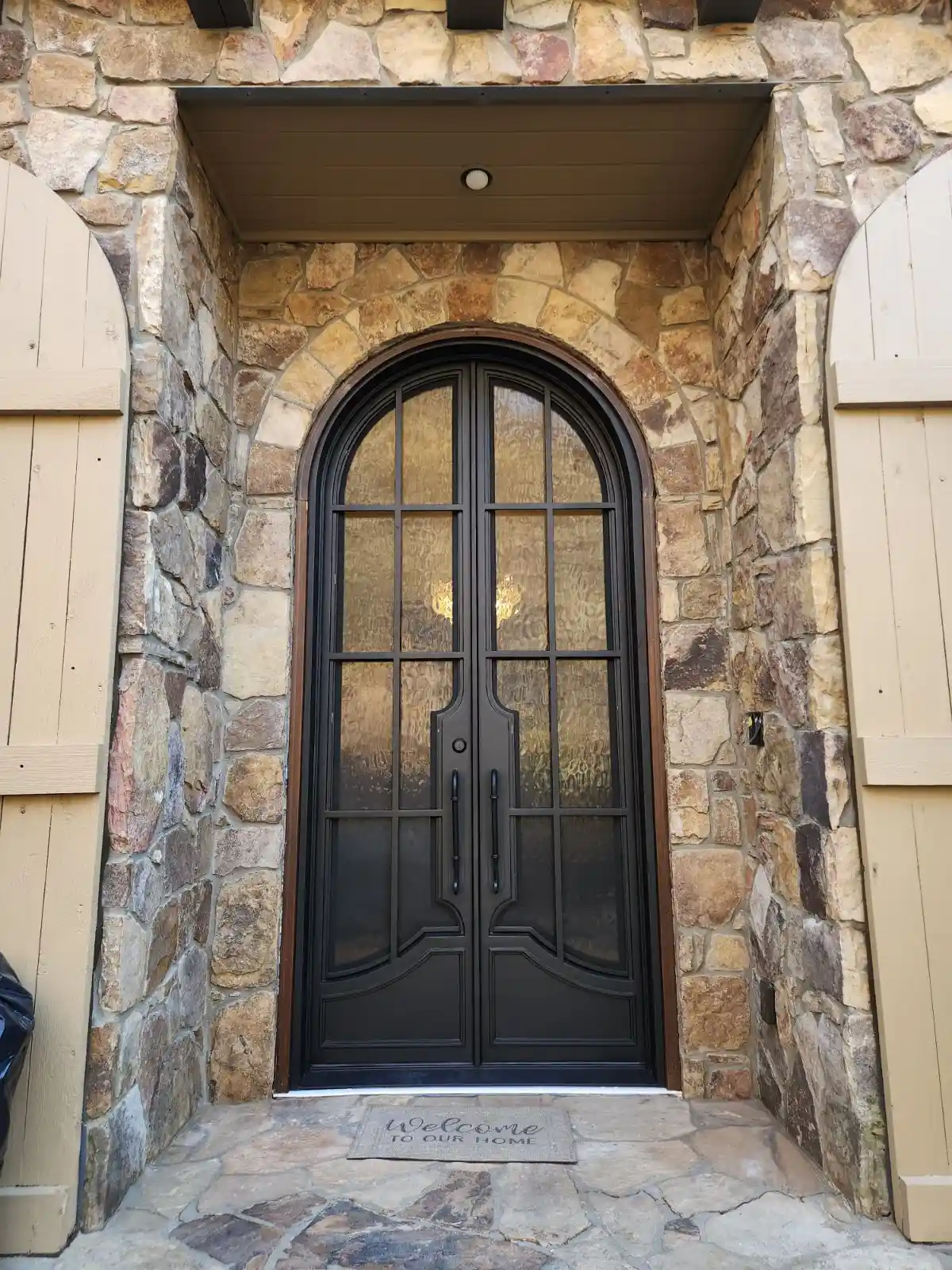
Double doors work beautifully in arched openings and provide practical advantages for moving racking, equipment, or large bottle formats.
Custom Configurations
Custom iron doors can be fabricated to any configuration including arched tops matching existing architectural details, integrated sidelights extending visual display, transoms adding height and light, and unusual shapes fitting unique openings.
Hardware and Security
Lock Systems
Wine cellar security options range from decorative deadbolts with antique character, to concealed multipoint locking for maximum security, to electronic access control for collection management, to keyed-alike systems matching home entry hardware.
Handle Options
Hardware significantly impacts aesthetics. Options include lever handles (easy operation, traditional to contemporary styles), pull handles (dramatic statement, often paired with separate locks), and integrated designs (hardware matching door’s iron detailing).
Hinges
For hinged wine cellar doors, hinge selection affects both function and appearance. Options include concealed hinges (clean appearance, modern aesthetic), surface-mounted hinges (traditional character, easy maintenance), and pivot systems (for larger, heavier doors).
Working with Forever Iron Doors Carolina
At Forever Iron Doors Carolina, we approach wine cellar doors as both functional equipment and design statements.
Our Process
We begin with understanding your cellar’s requirements including size and climate control system, design preferences and home’s architectural character, collection value and security needs, and budget parameters.
Our designers create detailed proposals with specifications ensuring climate performance. We coordinate with HVAC contractors to ensure door specifications support cooling system requirements.
Fabrication creates doors to exact specifications using quality materials and construction methods proven in Charleston’s environment. Professional installation by our certified team ensures proper fit, smooth operation, and effective sealing.
Charleston Expertise
Our experience throughout Charleston means we understand historic preservation considerations for downtown properties, coastal finishing requirements for waterfront homes, and architectural styles defining Charleston’s neighborhoods.
Protect Your Collection in Style
Your wine cellar door serves as guardian of your collection and introduction to your wine space. The right door protects carefully controlled conditions, secures valuable bottles, and creates visual impact worthy of your investment.
Whether you envision traditional scrollwork evoking European estates or sleek contemporary design showcasing your collection, custom iron wine cellar doors deliver performance and beauty Charleston’s finest homes demand.
Ready to explore wine cellar door options? Contact Forever Iron Doors Carolina today for a free consultation. We’ll discuss your cellar’s requirements and create a door protecting your collection while making a statement worthy of Charleston’s finest wine spaces.