Wine collecting has become more than a hobby for Charleston homeowners. It’s a lifestyle statement that combines passion, investment, and entertainment. Whether you’re converting an unused closet or designing a dedicated cellar in your new custom home, thoughtful planning ensures your wine storage serves both practical needs and aesthetic aspirations.
Charleston’s luxury home market increasingly expects wine storage as a standard amenity. At Forever Iron Doors Carolina, we’ve helped countless Charleston homeowners complete their wine cellar visions with stunning custom iron wine cellar doors that provide the climate control and visual impact these spaces deserve.
Why Charleston Homes Need Purpose-Built Wine Storage
Charleston’s subtropical climate creates unique challenges for wine storage. With average humidity exceeding 70% year-round and summer temperatures regularly climbing into the 90s, simply storing wine in a spare room won’t protect your collection.
The Climate Control Imperative
Wine requires specific conditions for proper aging: consistent temperature between 55-58°F, controlled humidity between 50-70%, protection from light, and minimal vibration. Charleston’s environment makes achieving these conditions impossible without dedicated climate control systems.
According to Wine Enthusiast, properly designed wine cellars have evolved from basement afterthoughts to statement pieces integrated throughout the home. “I love the idea of creating beautiful and chic cellars that are a feature in the home, not stuck in the basement,” explains designer Sarah Brennan.
Investment Protection
Fine wine represents significant financial investment. A properly designed cellar protects bottles worth hundreds or thousands of dollars from temperature fluctuations, humidity damage, and light exposure that can ruin vintages within months.
Wine Cellar Location Options for Charleston Homes
Basement Conversions
Traditional basement cellars remain popular for good reason. Below-grade spaces naturally stay cooler, reducing cooling system demands. Charleston’s older homes in the historic district often feature partial basements ideal for conversion.
Basement cellars offer natural temperature stability, space for larger collections, separation from living areas, and easier humidity control. However, Charleston’s flood-prone areas require careful waterproofing and elevated storage systems.
Under-Stair Wine Rooms
The space beneath staircases provides surprisingly effective wine storage opportunities. According to Houzz, under-stair wine rooms have become one of the most requested designs for homeowners wanting wine storage without dedicating entire rooms.
These compact cellars work well for collections of 200-500 bottles, integrate seamlessly into living spaces, and make excellent use of otherwise wasted square footage.
Living Room Wine Walls
The boldest trend in wine cellar design involves integrating storage directly into main living spaces. Wine Enthusiast reports that “collectors are now integrating racks as statement pieces in their homes. Go for a full wine wall. Place the collection in your living room.”
Floor-to-ceiling wine displays transform collections into living art while keeping favorite bottles accessible for entertaining. Glass-enclosed wine walls visible from dining or living areas create dramatic focal points perfect for Charleston’s entertainment-focused lifestyle.
Dedicated Wine Rooms
For serious collectors, dedicated wine rooms provide maximum flexibility. These spaces accommodate tasting areas, display features, and storage for thousands of bottles.
Charleston’s newer luxury developments in Daniel Island, Kiawah, and Mount Pleasant increasingly include dedicated wine room spaces in floor plans, recognizing buyers’ expectations for these amenities.
Design Styles for Charleston Wine Cellars
Traditional and Old World
Charleston’s historic architecture naturally complements traditional wine cellar aesthetics. Design elements include brick or stone accent walls, arched doorways and ceilings, dark wood racking in mahogany or walnut, wrought iron accents and hardware, and antique-inspired lighting fixtures.
Traditional designs pair beautifully with ornate iron wine cellar doors featuring scrollwork and grape motifs that evoke European estate cellars.
Contemporary and Modern
Charleston’s growing inventory of contemporary homes calls for sleeker wine cellar approaches. Modern design emphasizes clean lines and minimal ornamentation, metal and glass materials, LED accent lighting, floating or cable-suspended racking, and monochromatic color schemes.
According to Vineyard Wine Cellars, “minimalist yet artistic wine racks and storage solutions take center stage, seamlessly integrating into the cellar’s design.”
Transitional Blend
Many Charleston homeowners prefer transitional designs bridging traditional and contemporary. These cellars combine warm wood tones with clean architectural lines, incorporate both classic and modern lighting, and use glass extensively while maintaining traditional proportions.
Essential Climate Control Systems
Cooling Units
Wine cellar cooling systems range from compact through-wall units for smaller spaces to ducted split systems for larger cellars and self-contained cooling for basement installations.
System selection depends on cellar size, location, and ambient conditions. Charleston’s heat requires robust cooling capacity, often 20-30% more than inland locations due to higher ambient temperatures.
Insulation Requirements
Proper insulation proves critical in Charleston’s climate. Walls should achieve R-19 minimum (R-30 preferred), ceilings R-30 minimum, and vapor barriers on the warm side of insulation.
According to Wine Coolers Empire, accounting for obstacles like doors, windows, and HVAC penetrations during the insulation phase prevents future climate control problems.
The Critical Role of Doors
Your wine cellar door serves as the primary barrier between controlled cellar conditions and Charleston’s challenging exterior environment. A poorly sealed door forces cooling systems to work overtime while allowing temperature and humidity fluctuations that damage wine.
Quality wine cellar doors require solid-core or insulated construction, comprehensive weatherstripping, insulated glass (if glass is included), and proper threshold sealing.
At Forever Iron Doors Carolina, our custom wine cellar doors are engineered specifically for climate control applications. Iron’s thermal properties combined with insulated glass create effective barriers protecting your investment while providing stunning visual appeal.
Luxury Features Worth Considering
Tasting Areas
Incorporating tasting space transforms your cellar from storage to entertainment venue. Consider a tasting counter or table for 4-6 guests, proper lighting for label reading and atmosphere, temperature-appropriate seating, and stemware storage.
According to Millesime Modern Cellars, “the most compelling custom wine cellar designs incorporate features like tasting stations and concealed drawers into the overall structure.”
Display Features
Showcase special bottles with dedicated display elements including label-forward presentation racks, backlit display niches, rotating or angled display shelves, and temperature-controlled display cases for rare bottles.
Smart Technology
Modern wine cellars increasingly incorporate technology for climate monitoring and alerts via smartphone, inventory management systems, automated lighting controls, and integrated audio systems for entertaining.
Decorative Elements
Design details elevate wine cellars from functional to exceptional. Consider custom murals or artwork, decorative flooring (stone, tile, or engineered wood), ceiling treatments (barrel vault, coffered, or beamed), and antique wine accessories as decor.
Wine Cellar Door Options
The entrance to your wine cellar sets expectations for what lies beyond. Door selection significantly impacts both aesthetics and performance.
Iron and Glass Doors
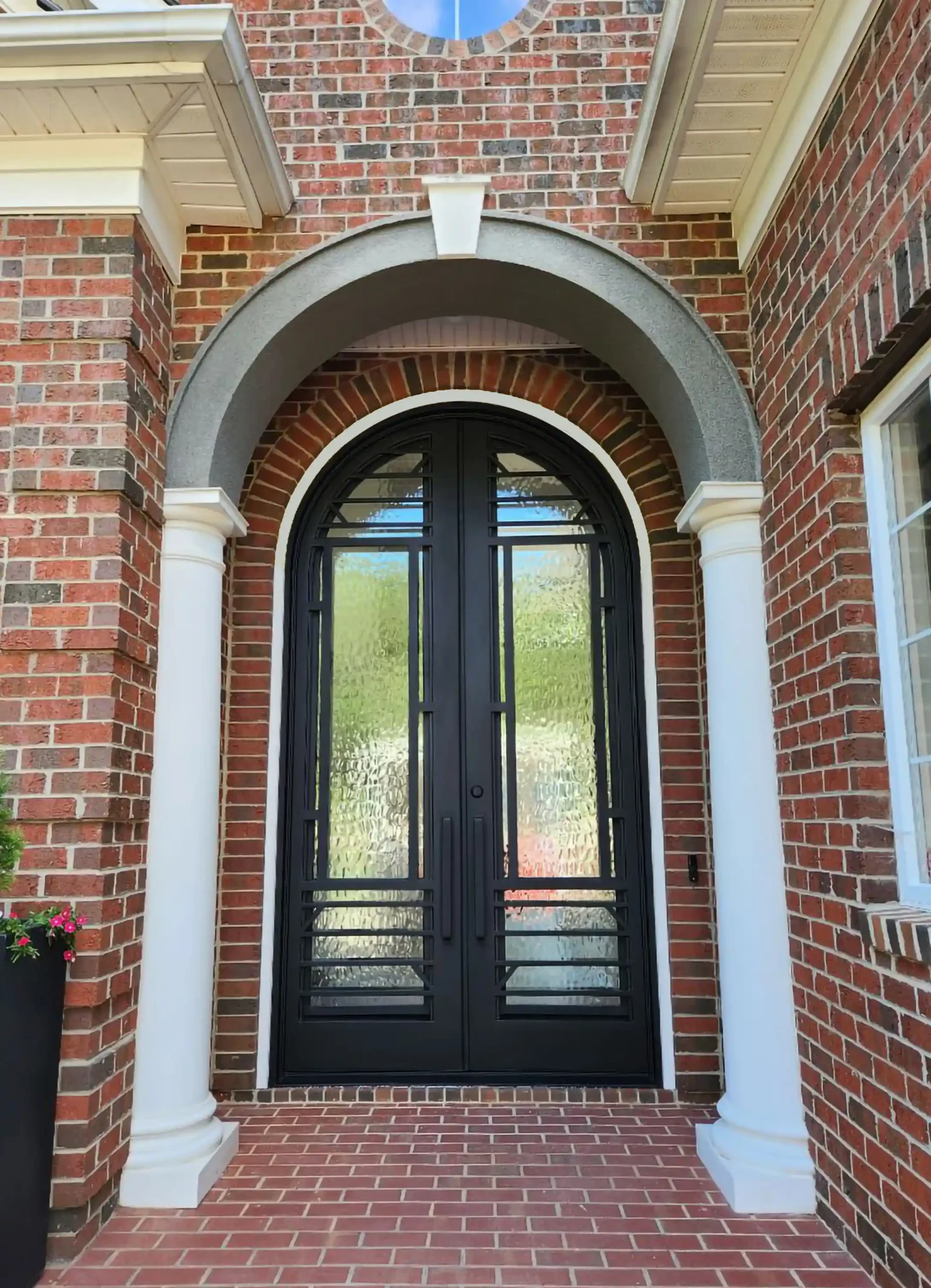
Iron-framed doors with insulated glass panels have become the premium choice for wine cellars. They provide excellent climate sealing when properly specified, security for valuable collections, stunning visual display of collections, and unlimited design customization.
According to Clark Hall Doors, iron doors offer “enhanced durability, superior seal, temperature control, and full insulation” compared to wood alternatives.
Traditional Wood Doors
Solid wood doors suit traditional cellar designs. Quality options include mahogany for moisture resistance, walnut for rich color, and reclaimed wood for character. Wood doors require careful sealing and may need periodic maintenance in Charleston’s humidity.
Full Glass Walls
Some contemporary designs eliminate traditional doors entirely, using full glass walls with integrated access. These installations require careful engineering for climate control but create dramatic showcase effects.
At Forever Iron Doors Carolina, we help Charleston homeowners select doors matching their cellar’s design while meeting performance requirements. Our portfolio showcases wine cellar installations throughout the Charleston area.
Planning Your Charleston Wine Cellar
Working with Professionals
Wine cellar design involves multiple disciplines: architecture, HVAC, electrical, and finish carpentry. Engaging experienced professionals ensures all elements work together.
Start with defining your collection goals (current size and growth plans), establishing budget parameters, selecting location and evaluating structural requirements, and choosing design style and finish materials.
Budget Considerations
Wine cellar costs vary dramatically based on size and complexity. Small closet conversions run $5,000-$15,000, mid-size rooms $15,000-$50,000, and large custom cellars $50,000-$150,000+.
Quality wine cellar doors represent a meaningful portion of the budget. Custom iron doors typically range from $3,000-$10,000 depending on size, complexity, and glass specifications.
Timeline Expectations
Allow adequate time for proper construction. Design and permitting takes 4-8 weeks, construction 6-12 weeks, climate system installation and testing 1-2 weeks, and racking installation 1-2 weeks.
Create Your Charleston Wine Cellar
Your wine collection deserves storage worthy of your investment and passion. Whether you’re planning a compact under-stair installation or a grand basement cellar, thoughtful design creates spaces that protect wine while enhancing your home’s character and value.
At Forever Iron Doors Carolina, we specialize in the element that makes the strongest first impression: your wine cellar door. Our custom iron wine cellar doors combine stunning design with the performance Charleston’s climate demands.
Ready to explore wine cellar door options for your Charleston home? Contact Forever Iron Doors Carolina today for a free consultation. Let’s discuss your vision and create an entrance worthy of your collection.